
“Made in Inner Mongolia.” Read that label again. It means made in China.
It sounds like the steppe. Nomads, wild horizons, goats braving winters far below freezing. And that is exactly the point: the word “Mongolia” sells. Inner Mongolia, however, is a region of the People’s Republic of China, a completely different country from Mongolia, with a different industry, different rules and a different story.
If your brand cares about where its knitwear really comes from, here is what the label does not tell you.
Image 1
Mongolian steppe, cashmere herd
A region is not a country
An origin label is supposed to name a country. In the United States, it is the law: imported textiles must state the name of the country where they were made, and “Inner Mongolia” alone does not qualify. In the European Union, origin labeling on clothing is not mandatory, but a label that suggests a false origin can mislead consumers, and consumer law takes that seriously.
Inner Mongolia is a region of China.
Mongolia is a country.
So why print “Inner Mongolia” instead of “China”? Because it borrows the prestige of a country the product never saw.
Try it yourself: search for a cashmere manufacturer in Mongolia and look closely at the addresses. Many of the websites presenting themselves as “Mongolian” cashmere factories are in fact based in Inner Mongolia, China.
Even “Mongolian cashmere” can travel
Mongolia supplies roughly 40% of the world’s raw cashmere. Here is the twist: a large share of it leaves the country unprocessed, mostly to China, where it is dehaired, spun and knitted. A sweater sold as “Mongolian cashmere” may contain Mongolian fiber that was transformed entirely elsewhere.
40%
of the world’s raw cashmere comes from Mongolia
0%
EU import duty on qualifying Mongolian knitwear (GSP+)
1
country, from pasture to finished piece
When fiber, yarn and garment all stay in Mongolia, the story is short and verifiable: from the herders’ pastures to the spinning mill, then to the atelier where your pieces are knitted and finished. Every step can be checked, photographed and documented. That is traceability you can actually show your customers.
So why do brands still choose China?
Many brands would love to say “Made in Mongolia”. Most of them end up in China for a handful of reasons:
- Habit. Long relationships with Chinese suppliers were built years before Mongolian manufacturing was on anyone’s radar.
- Color range. The assumption that China offers more shades. Our yarn partners offer around 150 stock colors, plus custom Pantone dyeing.
- Price. Sometimes slightly lower at the factory gate, though the gap narrows once duties are counted (more on that below).
- Volume. Industrial megafactories suit orders of tens of thousands of pieces. Mongolian ateliers are built for something else: luxury volumes, where every piece counts.
Notice what is missing from that list: quality. Mongolia gives up nothing there.
Herds, not factory farms
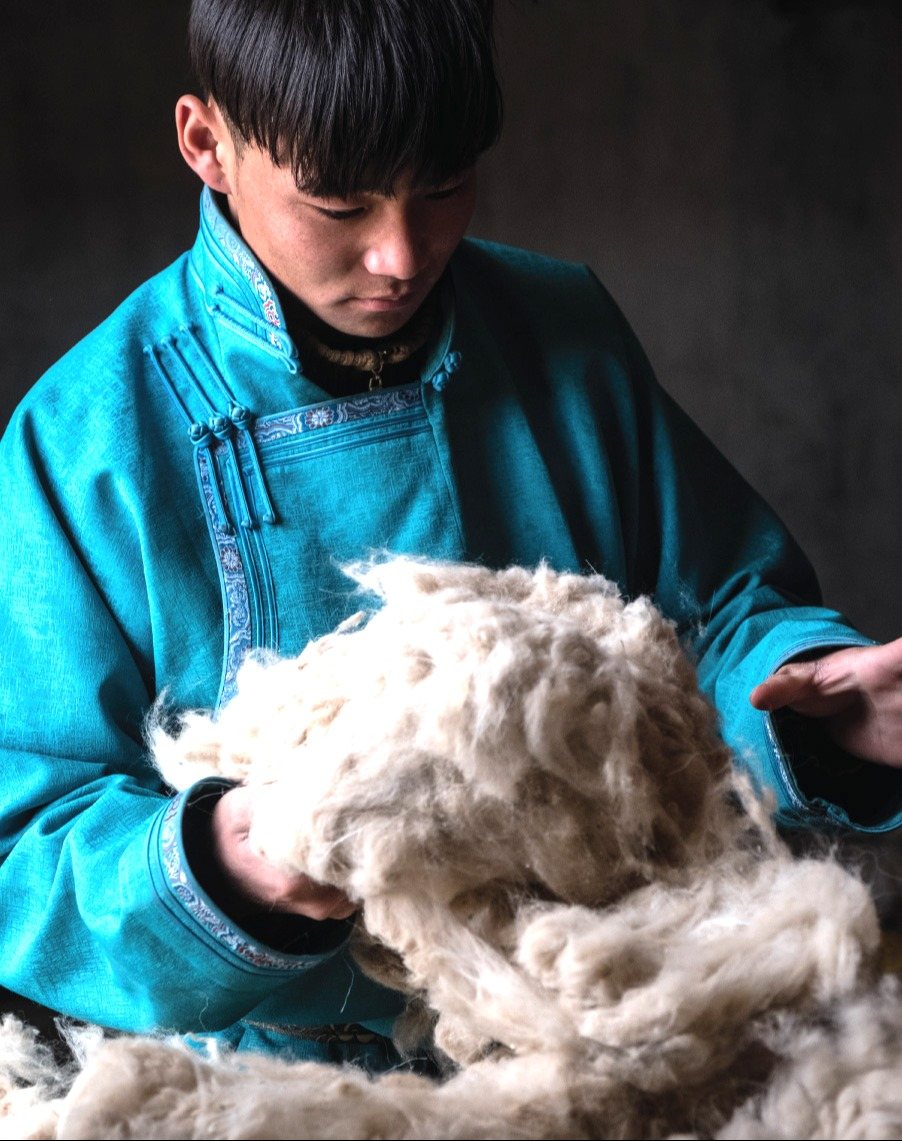
Mongolian cashmere starts on open pasture. Goats are raised by nomadic herding families who move with the seasons across vast grasslands. No sheds, no intensive farming. The brutal winters are precisely what push the goats to grow such a fine, warm undercoat.
We source from suppliers certified by the Sustainable Fibre Alliance, which works directly with herders on grazing practices and animal welfare. Other certifications are available on request, depending on the yarn.
Human-scale ateliers, and you can walk the floor
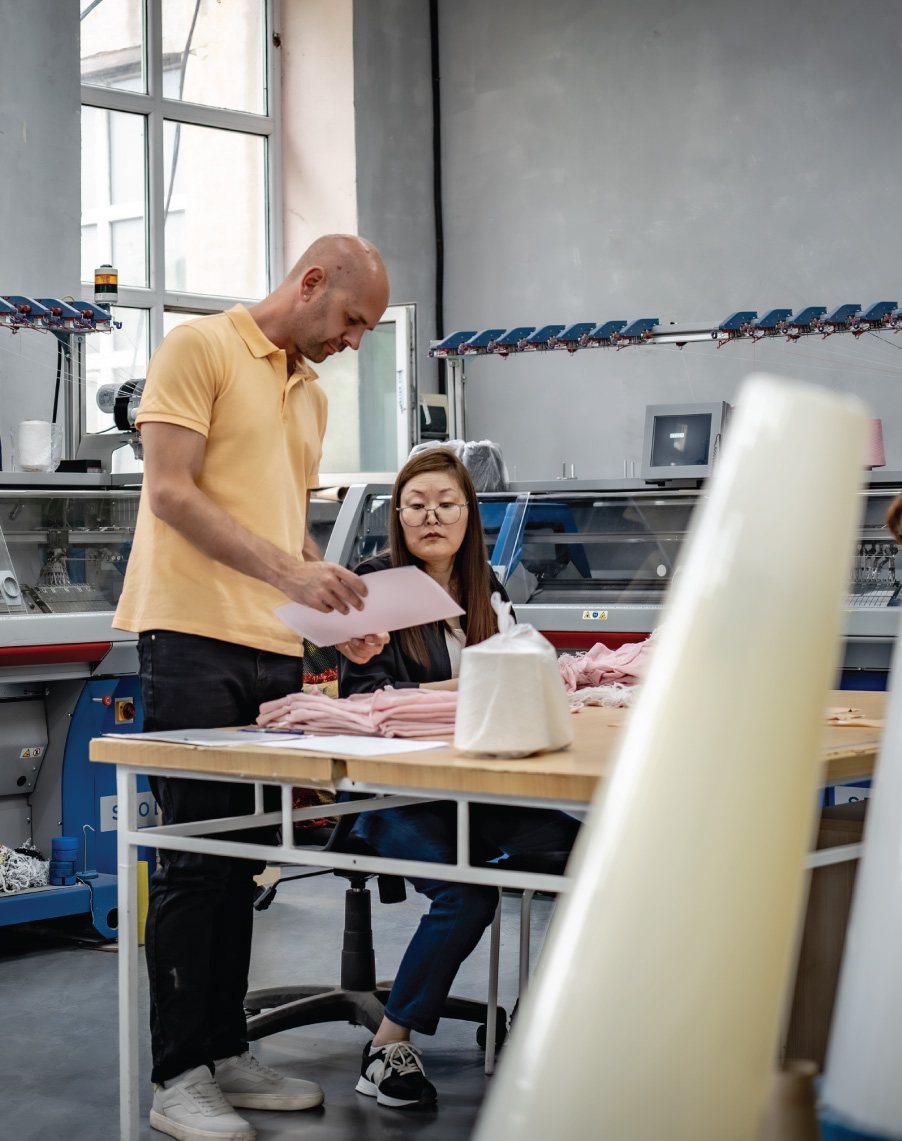
Mongolian knitwear is made in human-scale ateliers, not endless production halls. The people knitting, linking and finishing your pieces know them intimately, and it shows: in the hand of the yarn, in the precision of a seam, in the small adjustments a skilled knitter makes that an industrial line would never bother with. You feel the craft, not the machine.
When a project calls for it, we arrange visits to our partner ateliers. Come to Ulaanbaatar, meet the teams, see the working conditions with your own eyes. A certificate is good. Walking the floor is better.
And you are never talking to a machine behind a sales desk. Working with a Mongolian partner is a real human relationship: you speak with the people who develop your samples, and decisions are made fast.
Zero import duty into the EU
Here is the argument accountants love. Mongolia benefits from the EU’s GSP+ scheme, which removes import duties on most goods originating in the country, and clothing is the category that uses it most. Knitwear produced in Mongolia can enter the EU duty-free, provided it meets the rules of origin and travels with a valid proof of origin. Knitwear from China pays the standard EU duty on knitted garments.
Two honest footnotes: import VAT still applies, and the current GSP+ framework runs until the end of 2027, pending renewal. We handle the origin paperwork for every shipment.
Origin is not a quality grade
Let’s be fair: excellent and mediocre cashmere exist on both sides of the border. Quality comes down to fiber diameter in microns, fiber length, color, and how carefully the fiber was dehaired and spun. Always ask for these specifications, wherever you source.
What Mongolia adds is everything around the fiber: a supply chain you can verify, ateliers you can visit, craftsmanship you can feel, and a label that tells the truth.
Five questions to ask before you sign
- Which country does the fiber come from?
- In which country is the fiber dehaired, spun and knitted?
- Can I visit the atelier that will make my pieces?
- Which certifications cover the fiber, and can I see the documents?
- Which duty applies when the goods enter my market?
Made in Mongolia. Really.
HYPECHASE develops and produces cashmere, yak and camel knitwear in Mongolia for luxury maisons and independent labels. Technical development, yarn sourcing, production, quality control and export: we handle it all, from Ulaanbaatar. See how our private label service works, or tell us about your project.